The Bird Can Be Small in the Photograph
A practical exercise in making habitat part of the picture, without asking wildlife to accommodate your camera.
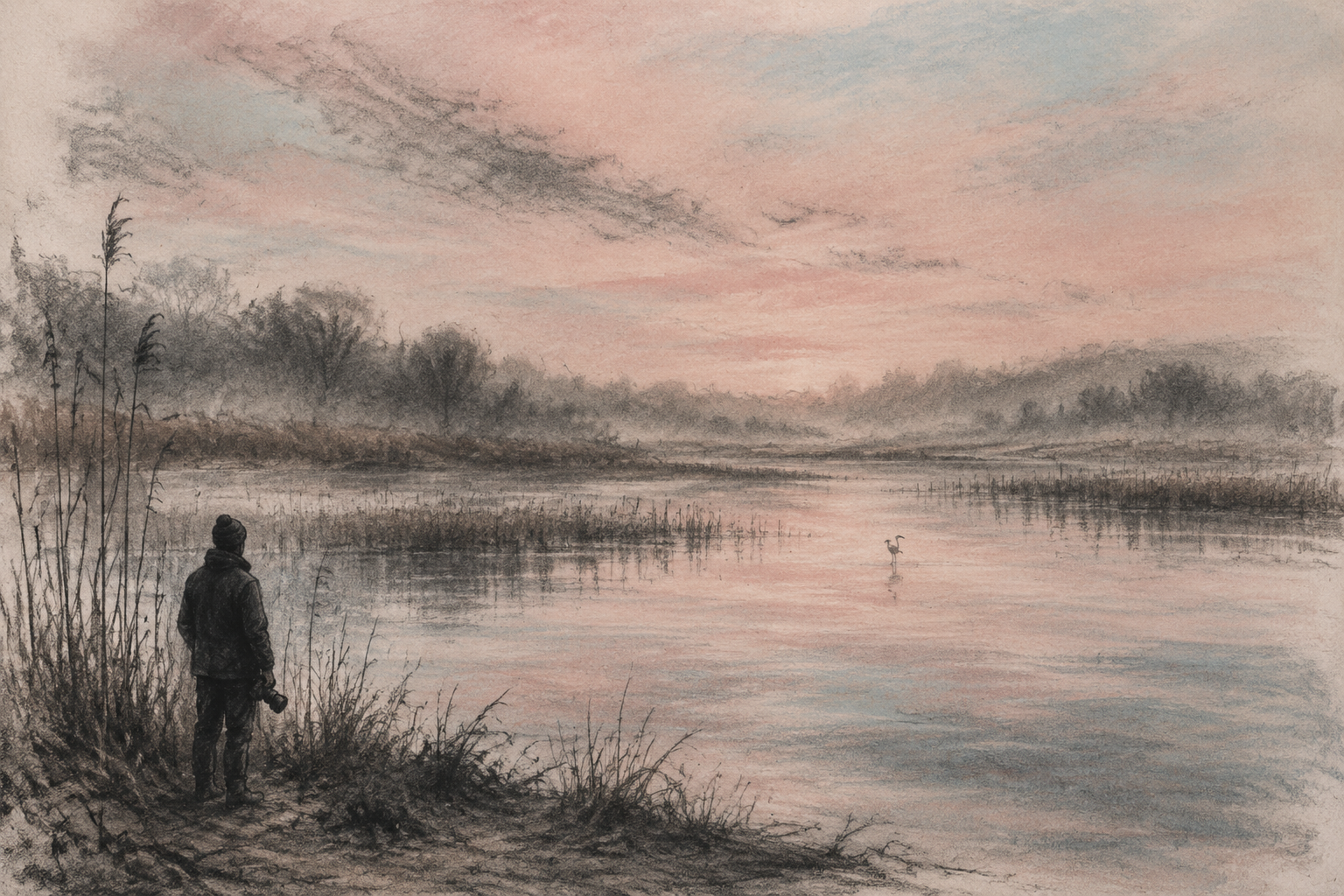
The bird is a white mark at the far edge of the pond. Around it, reeds lean into the water, a dark branch makes a crooked reflection, and the bank curves out of sight. You lift your camera and immediately wish the bird were bigger. But bigger in the frame is only one possible photograph. What if the pond is not getting in the way? What if it is half the subject?
A close portrait can reveal beautiful detail. This is not an argument against one. It is an invitation to make a different kind of picture: an animal with somewhere to be. Instead of asking how much background you can remove, ask which parts of the surroundings help the viewer understand the scene.
Begin by choosing a place where you are allowed to stand without disturbing wildlife. Read local signs and respect closures. Audubon’s ethical photography guidance puts birds’ welfare before the picture: keep sufficient distance, and back away if your presence changes their behaviour. A bird remaining still is not proof that it is comfortable. Do not advance simply to provoke a flight photograph.
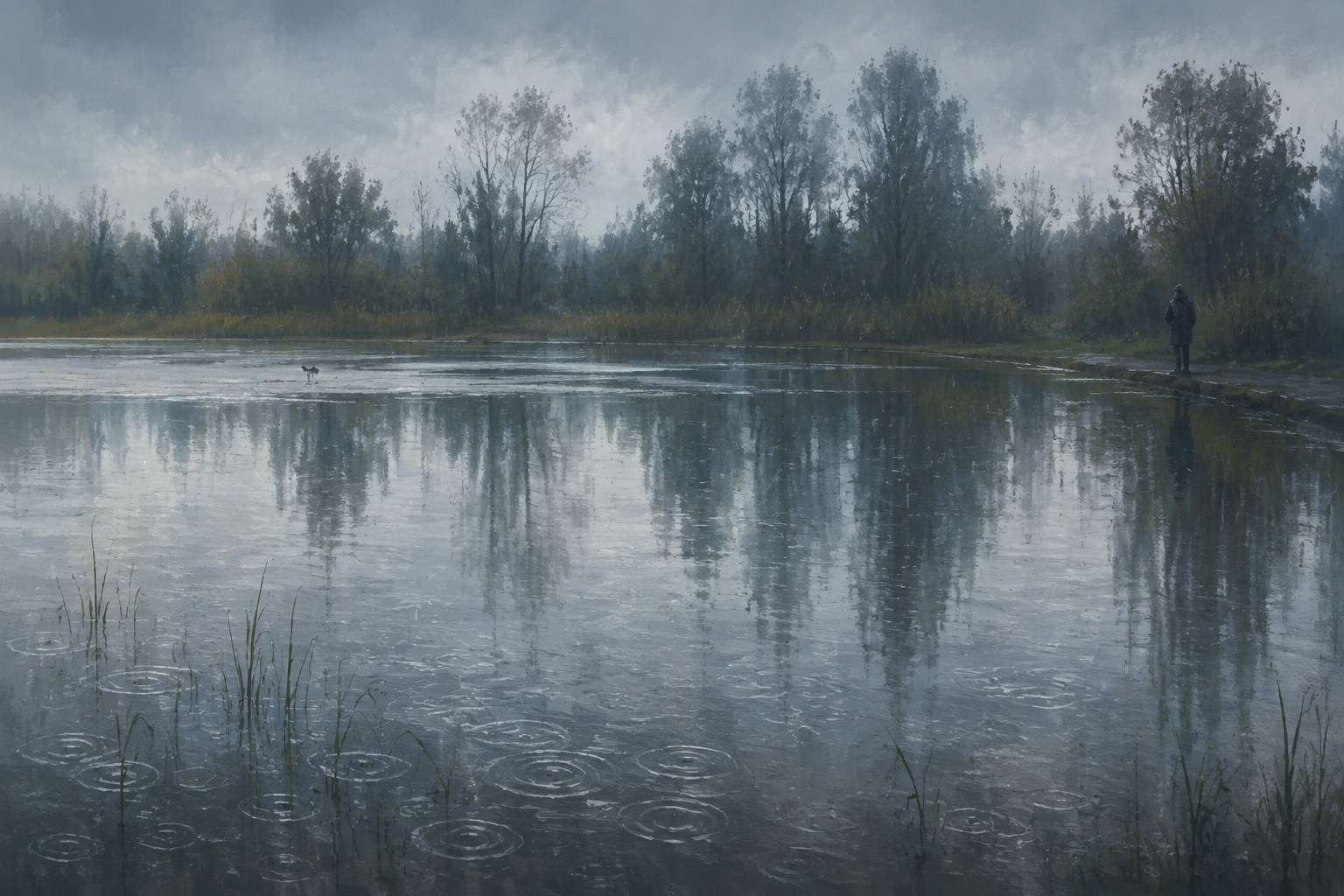
Now set yourself a composition exercise from that appropriate position. Pick a bird that is already visible and let it remain small. If there is no bird in view, work on the habitat alone. You are practising how to arrange a picture, not setting a deadline that another living thing has to meet.
Look for three ingredients: the subject, a piece of its setting, and a visual route between them. At a pond, that route might be the curved bank. In a tree, it might be the branch on which the bird is perched. These are drawing decisions as much as camera decisions. A painter or comic artist can make the same exercise in a thumbnail sketch.
Keep the setting specific. A tangle of reeds and an expanse of open water tell different visual stories. You do not need to identify every plant or make ecological claims you cannot support. Begin with what you can honestly see: a narrow perch, broken shade, reflected light, the distance between one shape and another.
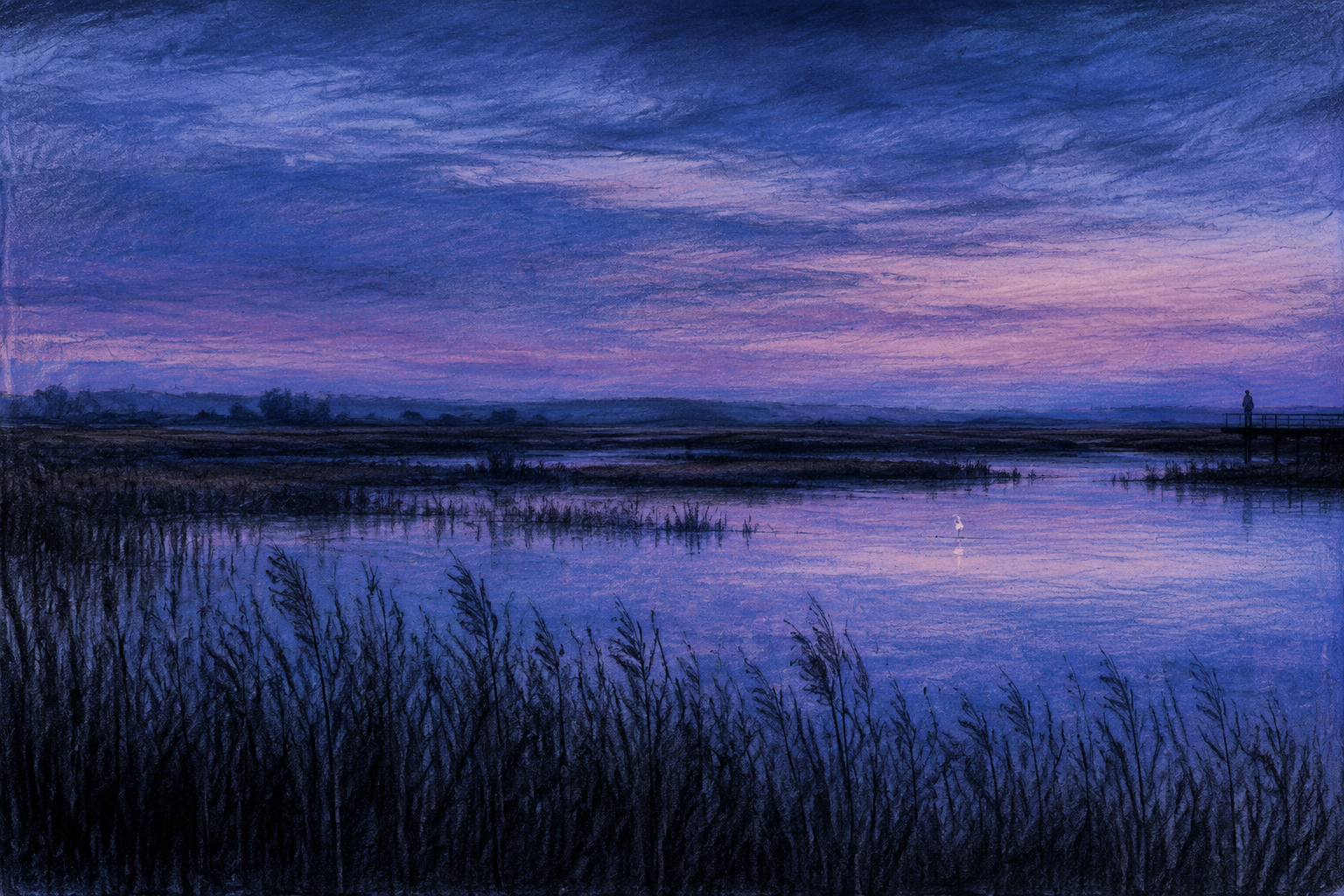
Without moving closer, try three framings. In the first, give most of the image to the water or sky. In the second, place more emphasis on the bank or branches. In the third, look for a simpler arrangement of the same elements. Change framing or zoom only as your equipment permits; the exercise does not require new gear.
Compare the versions at roughly the size somebody will see them on a phone. Is the bird still findable? Does a bright patch pull attention away from it? Can the viewer distinguish the subject from the background? A small subject needs a readable relationship with its surroundings, not necessarily a bigger share of the image.
One useful revision is to move the edge of the frame, not your feet. A slight change in camera direction might exclude a distracting bright corner. Leave enough space for the habitat to remain meaningful. If every version looks busy, keep the clearest one as a study and make a note of what made it difficult.
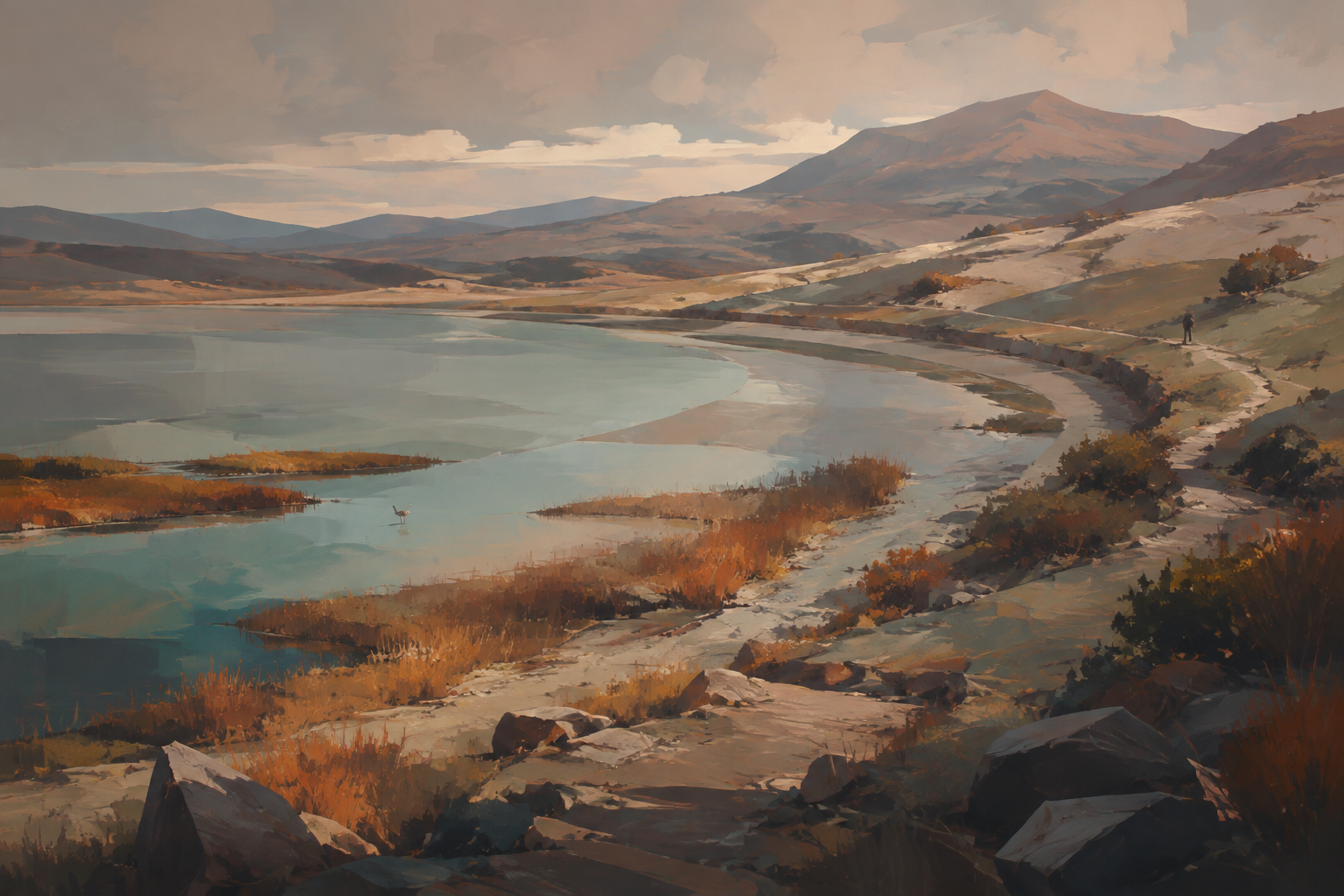
Do not solve the composition by rearranging the living scene. Avoid trampling vegetation, and leave nests and their cover alone. If the photograph cannot be made responsibly from where you are permitted to be, choose another subject. That is a practical boundary, not a challenge to invent a clever workaround.
Afterwards, write a plain caption describing what is actually shown. If you do not know the species, do not guess. Keep observation separate from interpretation: a bird standing beside reeds is visible; its supposed loneliness is your reading. If the image is an illustration, label it as an illustration rather than a wildlife encounter.
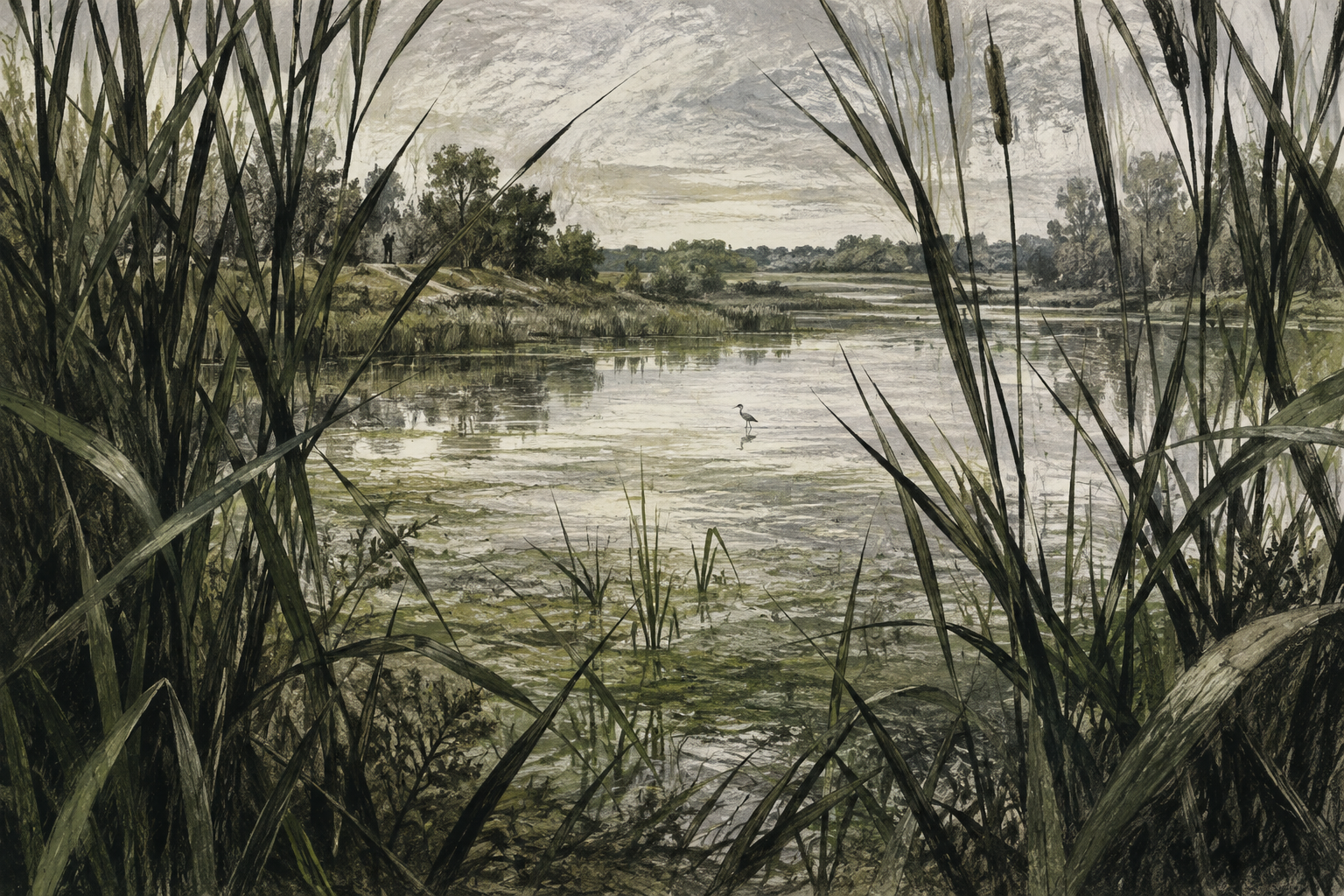
Give this exercise a small place in your day: a short visit to a suitable public spot, or a few composition sketches from a photograph you already own. End with one wide frame and one sentence about what the surroundings contribute. You may come home without a feather-perfect portrait. You can still come home with a photograph in which the bird has a world.

Comments
Post a Comment